On January 12, 1943, Cuba's physicians won a fight they had waged for eighteen years. The President signed the Ley de Retiro Médico, a retirement law for Cuban doctors, funded by their own dues and protected by statute. That afternoon, two thousand people gathered on the Malecón to hear the minister announce the signature. It was the largest public celebration the Cuban medical profession had ever held.
How doctors built their own institutions
The law was the work of the Federación Médica de Cuba, founded at a packed assembly in Havana's Teatro Payret on October 24, 1925. Over the next two decades, the Federación organized, went on strike, went to court, and lobbied. When the government dissolved it in 1935, its leaders kept meeting in private homes, and the Supreme Court vindicated them two years later. In 1940, its demands were written into the new Constitution, which guaranteed autonomous professional colegios.
The retirement law completed that work. It was not a gift from the state. Physicians designed it, paid for it, and governed it themselves.
On October 24, 1944, nineteen years to the day after its founding, the Federación became the Colegio Médico Nacional de Cuba, the self-governing national body of Cuban physicians.
The man in the Senate gallery
While the doctors celebrated on the Malecón, Carlos Fernández Conde was where he always was: in the Senate gallery, writing it down. He was the parliamentary correspondent for El Mundo, and the Senate was his beat. He had covered the making of the 1940 Constitution. Now he recorded the passage of the law his brother, Dr. Augusto Fernández Conde, had helped fight for.
Carlos then took up a cause of his own: a retirement law for journalists, modeled on what the physicians had just won. Journalists, he argued, served the Republic no less.
To qualify for a pension under such a law, a journalist would need ten years of service. Carlos had seven.
He died on January 17, 1944, at thirty-four, leaving a wife and two small sons with no pension. His colleagues raised money to buy the family a house and delivered the deed on the first anniversary of his death.
Why this story matters
This is not a tragedy about a bad system. It is a portrait of a working republic. Physicians organized, made demands, won a constitution and a law, and governed themselves. Journalists were following the same path. Civil society moved slowly, and for Carlos it moved too slowly.
But it moved. That is what was lost after 1959, when the institutions doctors had built, including the Colegio Médico and its retirement fund, were taken over by the state.
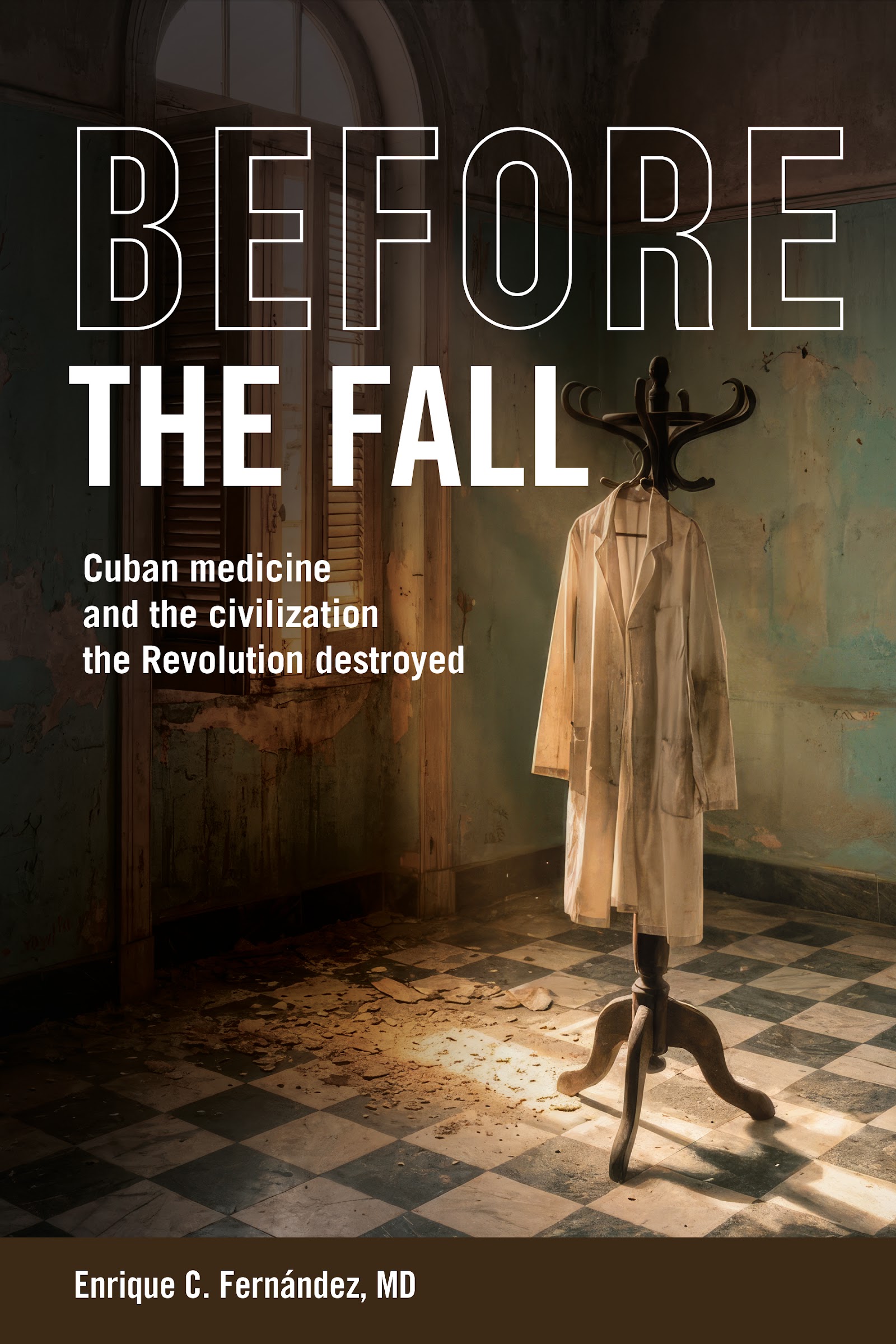
The full story of Carlos, Augusto, and the institution they served from opposite sides of the same wall is told in Before the Fall, released December 3, 2026.