Enrique C. Fernández, MD

Preview · Goes live November 5, 2026 at 8:00 AM ET

Cuban Medicine in 1958: What Was There Before the Fall

Doctors, infant mortality, mutualist hospitals and real gaps: a factual look at Cuban health care on the eve of 1959.

A common story holds that Cuba had almost no health care before 1959. The numbers say otherwise. Drawn from the same international sources that defenders of the Revolution cite, they describe one of the most advanced medical systems in Latin America.

The doctors

In 1958, Cuba had about 6,000 physicians for a population of 6 million, roughly 9.2 per 10,000 people. In Latin America, only Uruguay and Argentina ranked higher. By some measures, Cuba had more doctors per person than Britain, France, or the Netherlands.

Behind them stood a full medical economy: 3,624 pharmacists, 2,260 pharmacies, about 500 laboratories, and 60 pharmaceutical manufacturers.

The results

  • Infant mortality was 33.4 per 1,000 live births, the lowest in Latin America and among the lowest in the world at the time.
  • Life expectancy was 65.1 years, well above the regional average.
  • Causes of death had shifted. Heart disease, cancer, and stroke led the list, not infections. Public health experts treat that transition as a marker of a developed country.

The hospitals, and who paid for them

On the eve of the Revolution, Cuba had about 230 hospitals. The most distinctive were the mutualist clinics. Immigrant associations such as the Centro Gallego and the Centro Asturiano built their own hospitals, funded by members paying a few dollars a month. For that, a family received hospitalization, surgery, and medicines.

This was neither government medicine nor private insurance. It was Cuban civil society caring for itself, and by 1958 it covered hundreds of thousands of people.

What was missing

The system had real gaps, and honesty requires naming them. Havana had 9.6 hospital beds per 1,000 people; the other provinces had between 1.9 and 2.7. There was only one rural hospital on the island. A child born in Havana in 1953 could expect to live about four years longer than one born in the countryside.

Those inequities were serious. A democratic republic with a strong medical profession was obligated to fix them.

The question

The real question is not whether Cuba's health care was perfect in 1958. It was not. The question is whether destroying the physicians, institutions, and associations that built it was the necessary price of reaching the rest of the island.

What happened next answers it. As thousands of physicians left after 1959, the ratio of doctors to population fell to 5.4 per 10,000. It took until 1975 to recover the level Cuba had already reached in 1958.

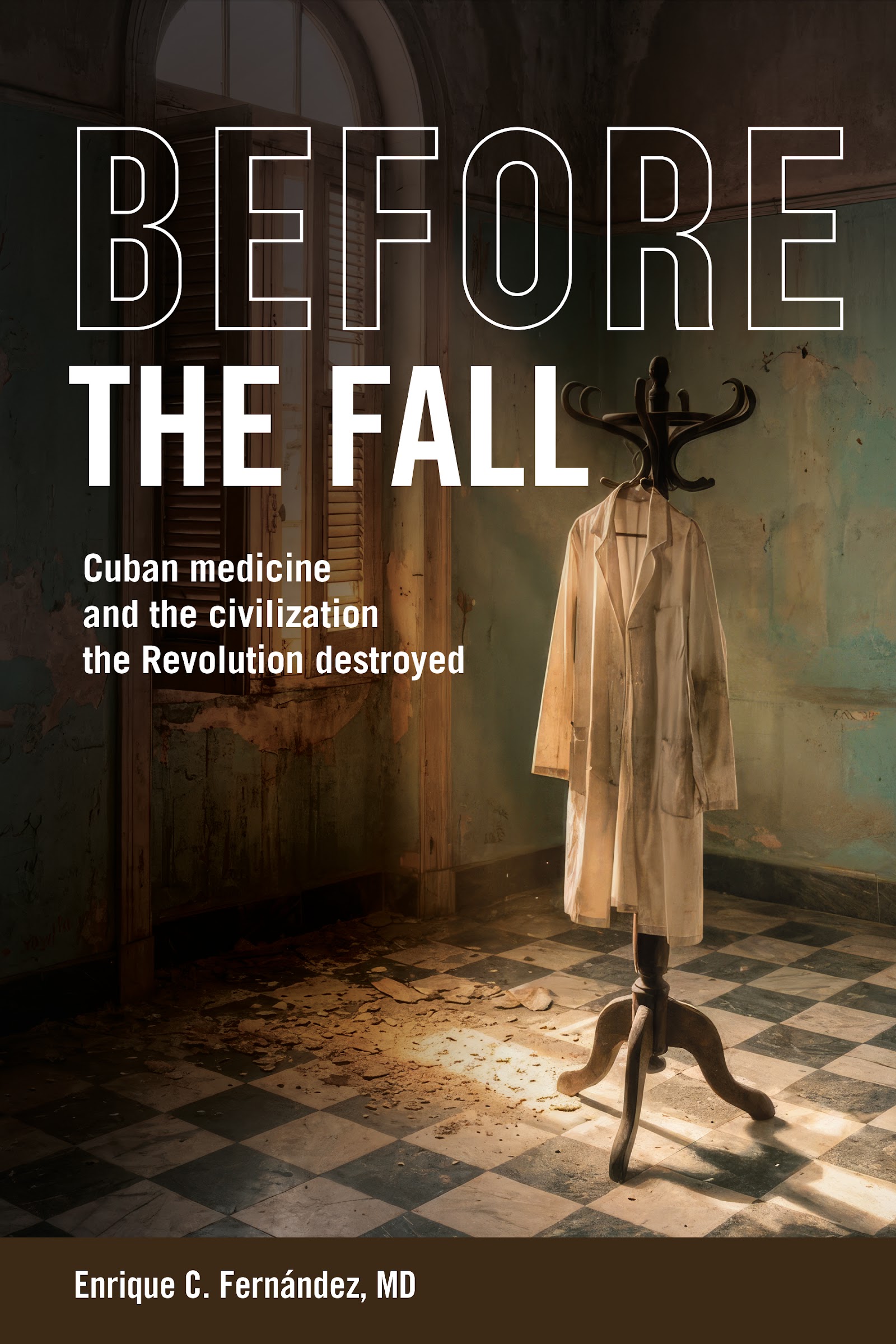
That story, and the people who lived it, is told in Before the Fall: Cuban Medicine and the Civilization the Revolution Destroyed, released December 3, 2026.

Dr. Enrique C. Fernández, MD, MBA, FAAFP, is a family physician in Miami and the author of Before the Fall.

About the author

Join the author's list

New essays, forthcoming books, and occasional reflections.

We use your email only to send the list. Privacy Policy

Keep reading the preview

Vista previa · Se publica el 5 de noviembre de 2026 a las 8:00 a. m. (hora del Este)

La medicina cubana en 1958: lo que había antes de la caída

Médicos, mortalidad infantil, hospitales mutualistas y carencias reales: una mirada a la salud en Cuba en vísperas de 1959.

Una versión muy repetida afirma que Cuba casi no tenía atención médica antes de 1959. Las cifras dicen otra cosa. Tomadas de las mismas fuentes internacionales que citan los defensores de la Revolución, describen uno de los sistemas médicos más avanzados de América Latina.

Los médicos

En 1958, Cuba tenía unos 6.000 médicos para una población de 6 millones, alrededor de 9,2 por cada 10.000 habitantes. En América Latina, solo Uruguay y Argentina la superaban. Según algunas mediciones, Cuba tenía más médicos por habitante que Gran Bretaña, Francia o los Países Bajos.

Detrás de ellos había toda una economía médica: 3.624 farmacéuticos, 2.260 farmacias, unos 500 laboratorios y 60 fabricantes de medicamentos.

Los resultados

  • La mortalidad infantil era de 33,4 por cada 1.000 nacidos vivos, la más baja de América Latina y una de las más bajas del mundo en aquel momento.
  • La esperanza de vida era de 65,1 años, muy por encima del promedio regional.
  • Las causas de muerte habían cambiado. Las enfermedades del corazón, el cáncer y los accidentes cerebrovasculares encabezaban la lista, no las infecciones. La salud pública considera esa transición una señal de país desarrollado.

Los hospitales, y quién los pagaba

En vísperas de la Revolución, Cuba contaba con unos 230 hospitales. Los más singulares eran las clínicas mutualistas. Asociaciones de inmigrantes como el Centro Gallego y el Centro Asturiano construyeron sus propios hospitales, sostenidos por socios que pagaban unos pocos pesos al mes. A cambio, la familia recibía hospitalización, cirugía y medicinas.

No era medicina estatal ni seguro privado. Era la sociedad civil cubana cuidándose a sí misma, y en 1958 amparaba a cientos de miles de personas.

Lo que faltaba

El sistema tenía carencias reales, y la honestidad obliga a nombrarlas. La Habana tenía 9,6 camas de hospital por cada 1.000 habitantes; las demás provincias, entre 1,9 y 2,7. Había un solo hospital rural en toda la isla. Un niño nacido en La Habana en 1953 podía esperar vivir unos cuatro años más que uno nacido en el campo.

Esas desigualdades eran graves. Una república democrática con una profesión médica fuerte tenía el deber de corregirlas.

La pregunta

La verdadera pregunta no es si la medicina cubana era perfecta en 1958. No lo era. La pregunta es si destruir a los médicos, las instituciones y las asociaciones que la habían construido era el precio necesario para llevarla al resto de la isla.

Lo que vino después responde. Al marcharse miles de médicos tras 1959, la proporción cayó a 5,4 por cada 10.000 habitantes. Hubo que esperar hasta 1975 para recuperar el nivel que Cuba ya tenía en 1958.

Esa historia, y la de quienes la vivieron, es la de Antes de la Caída, que saldrá a la venta el 3 de diciembre de 2026.

El Dr. Enrique C. Fernández, MD, MBA, FAAFP, es médico de familia en Miami y autor de Antes de la Caída.

Sobre el autor

Join the author's list

New essays, forthcoming books, and occasional reflections.

We use your email only to send the list. Privacy Policy

Siga leyendo la vista previa